When you need EPDM roofing in Los Angeles that building owners can trust, LA Roof Kings installs and repairs single-ply rubber membrane systems for flat and low-slope commercial roofs. EPDM is one of the most reliable membranes for the region, engineered to withstand intense UV exposure, high summer heat, and the temperature swings that accompany Santa Ana wind season. We are a family business; we have been roofing here for more than 20 years, and we know how this climate affects a flat roof over time.
EPDM Roofing Los Angeles Property Owners Rely On
EPDM stands for ethylene-propylene-diene monomer, a durable synthetic rubber membrane that has protected flat and low-slope roofs for decades. It is installed as a single-ply sheet, which means fewer seams, fewer weak points, and a cleaner waterproofing barrier across the entire roof. For Los Angeles commercial buildings, that matters. Flat roofs here take the full force of the sun for most of the year, and a membrane that cracks or dries out quickly can lead to leaks, interior damage, and rising energy bills.
EPDM holds up where it counts. The rubber stays flexible as the roof expands and contracts through hot days and cool nights, so it resists the splitting that stiffer materials develop over time. It also withstands UV radiation and ozone, two factors a Los Angeles roof faces constantly. Whether your building is a warehouse, a retail center, an office block, or an industrial facility, an EPDM system offers a proven, low-maintenance way to keep water out and protect everything beneath. It is one of several systems in our commercial roofing range, part of the full set of roofing services we provide across Los Angeles County.
Why EPDM Works for Flat and Low-Slope Roofs
Flat and low-slope roofs drain slowly, so the membrane has to do more of the waterproofing work than it would on a steep roof. EPDM is built for exactly this. The single-ply sheet creates a continuous surface with sealed seams, giving water very few places to get in.
- Long service life. A properly installed and maintained EPDM roof performs well for many years, lowering your long-term cost of ownership.
- Strong weather resistance. The membrane handles UV, heat, and ozone without breaking down quickly, a real advantage in the Los Angeles climate.
- Flexibility. EPDM moves with the building as temperatures shift, so it resists cracking at the seams and around penetrations.
- Low maintenance. Repairs are straightforward when needed, and routine upkeep is simpler than for more complex systems.
- Energy-efficient options. EPDM is available in reflective formulations that can help reduce heat gain and support your building’s cool roof goals under Title 24.
Not sure EPDM is the right fit? A reflective white membrane behaves differently under the same sun. See TPO roofing for that comparison.
Our EPDM Installation Process
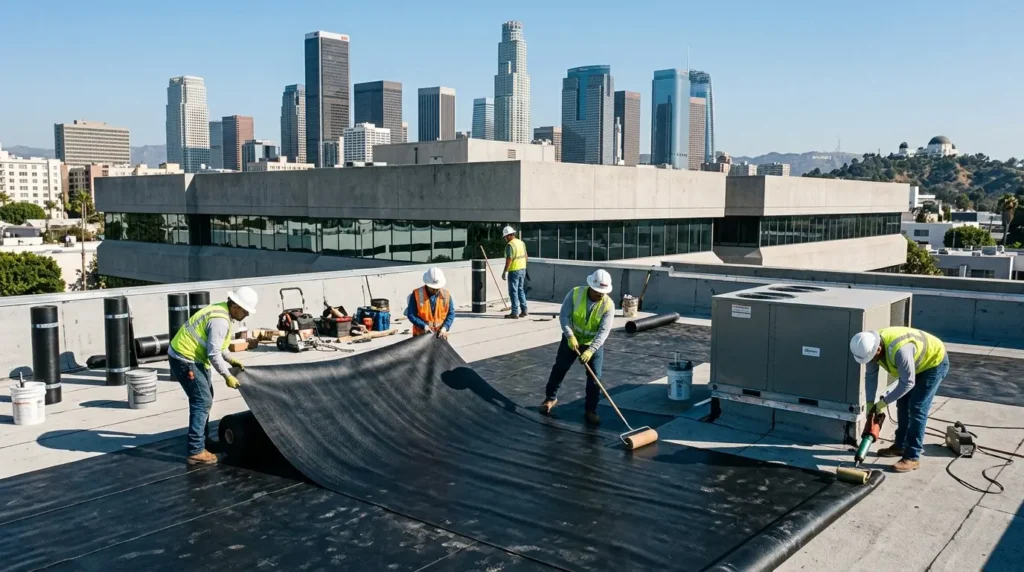
A single-ply membrane looks simple once it is down. Getting it there without trapping a problem underneath is the part that takes experience, and it is why we supervise every EPDM job on-site from the first tear to the final walkthrough.
The first thing we do is find out what condition the existing roof is really in. Moisture in the deck, ponding that never clears, soft spots hiding under an old membrane. These are the things that decide whether the new roof lasts or fails early, and they are invisible from the ground. Once we know what we are working with, we tell you whether the old system can stay or has to come off. Sound decking sometimes allows a new membrane to go over the top. Wet or failing decking never does, and we will say so even when it makes the job bigger.
Bad decking gets replaced before a single sheet of EPDM touches it. Then the membrane goes down, seams sealed, with the edges, drains, and penetrations detailed by hand. We finish by testing the drains and perimeter for water, then walking the roof with you so nothing is a surprise. Permits and inspections are ours to handle, not yours.
The work is covered by a written warranty and performed under California Contractor License #600662. What you get from us is a straight scope, a crew that shows up, and a roof that was put on right the first time.
EPDM Attachment Methods We Use
How the membrane is secured depends on your roof, its exposure, and the building structure. We install all three standard methods and recommend the right one for your property.
- Fully adhered. The membrane is bonded directly to the substrate with adhesive for a clean, low-profile finish that handles wind exposure well.
- Mechanically fastened. The sheet is anchored with fasteners and plates along the seams, a strong and efficient option for many commercial roofs.
- Ballasted. The membrane is held in place with smooth stone, which can be a practical choice on the right flat roof.
We also help you choose the right membrane thickness for your building. A heavier membrane offers better puncture resistance where a roof sees regular foot traffic or equipment access.
EPDM Repair and Restoration
An aging membrane is not automatically a dead one. If the deck below is still solid, a commercial roof repair will usually buy you years, and that is what we will recommend. Open seams, punctures, damage from standing water, flashing that has given up. All of it is fixable, and a restoration coat can extend the life of a worn membrane before you have to consider commercial roof replacement at all. Staying on top of it through commercial roof maintenance is what keeps you in repair territory rather than replacement territory.
Timing changes everything here. A separated seam caught this month is a minor fix. The same seam ignored until the rains come has let water travel sideways through the assembly, soaked the insulation, and started working on the deck. Stained ceilings, damp insulation, water that sits on the roof and never leaves. Any of those means the roof is already talking to you. Book a free inspection, and we will tell you straight whether a patch will hold or whether you are past that point.
Why Los Angeles Building Owners Choose LA Roof Kings
This is a family business, and it has been for more than 20 years. That length of time in Los Angeles County means we have watched EPDM roofs age here, seen which ones held and which ones did not, and learned what the sun actually does to a membrane over the course of a decade.
- Licensed and insured under California Contractor License #600662.
- A written warranty stands behind every job.
- Inspections are free, and the recommendation is the honest one, not the expensive one.
- Crews who know low-slope roofs in this climate and what Title 24 asks of them.
- A scope you can read and a plan you can hold us to.
Frequently Asked Questions