Are you searching for a modified bitumen roofing contractor that Los Angeles building owners can trust? LA Roof Kings installs and repairs multi-ply modified bitumen systems designed for flat and low-slope commercial roofs. Modified bitumen is an asphalt-based membrane strengthened with rubber or plastic modifiers and applied in layers to create a durable, waterproof surface that stands up to Los Angeles heat and sun. As a family-owned business with over 20 years of experience, we help commercial and industrial property owners throughout Los Angeles County protect their buildings with roofs made to last.
The Modified Bitumen Roofing Contractor Los Angeles Owners Trust
Modified bitumen is an updated version of traditional built-up roofing. It begins with asphalt and adds polymer modifiers, making the membrane much more flexible and durable than regular asphalt. This creates a multi-ply system, usually installed in two or more layers, giving your roof extra waterproofing. If one layer is damaged, the layers below still keep water out.
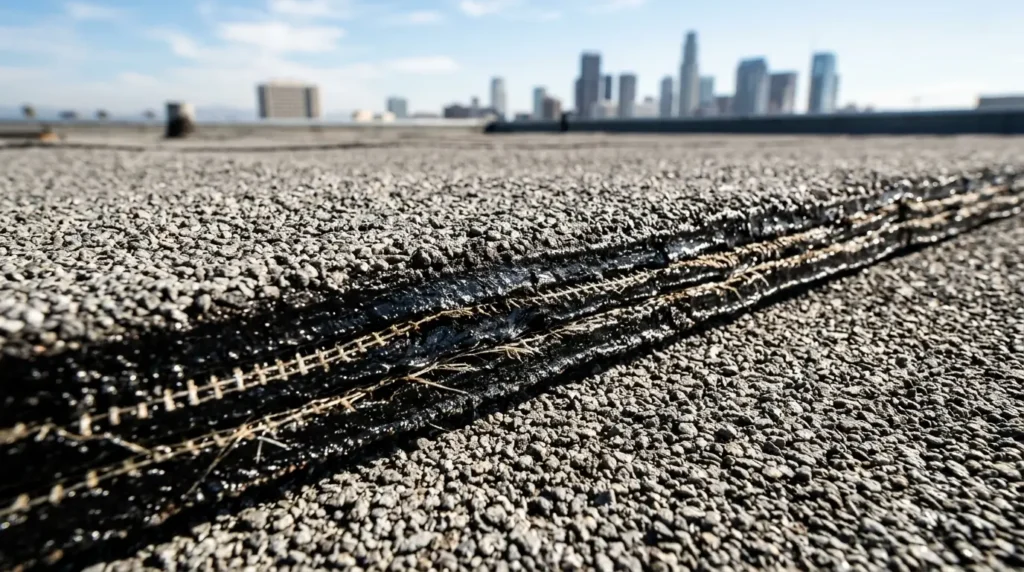
For Los Angeles commercial buildings, that toughness matters. Flat roofs here take constant UV exposure and heavy foot traffic from HVAC servicing and maintenance crews. A granular-surfaced modified bitumen cap sheet resists wear, shrugs off the sun, and can be finished as a reflective, cool roof surface that helps meet Title 24 goals. Whether you run a warehouse, a retail center, an office block, or an industrial facility, we install a modified bitumen system that fits the building and holds up for the long run. It sits alongside the other systems in our commercial roofing range, part of the full set of roofing services we provide across Los Angeles County.
SBS and APP Modified Bitumen Systems
Modified bitumen comes in two main types, and the right one depends on your roof and how it will be installed. As your contractor, we help you choose and explain why.
- SBS modified bitumen. Rubberized asphalt that stays flexible, which makes it a strong choice for roofs that expand and contract with temperature swings. It can be installed with cold adhesive, hot asphalt, or as a self-adhered sheet.
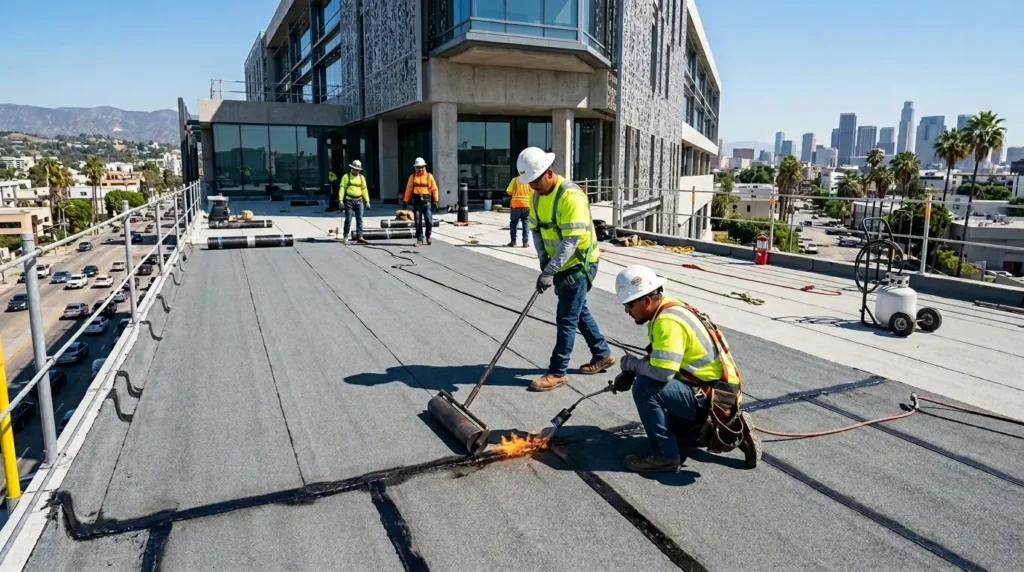
- APP modified bitumen. Plastic-modified asphalt is built for heat resistance and a tough, weather-hardy surface. It is typically torch-applied, fusing the layers into one continuous membrane.
Both deliver excellent waterproofing when installed correctly. The difference is in flexibility, surface performance, and application method, which is exactly the kind of decision a qualified contractor should walk you through rather than leave to guesswork. If you are weighing a single-ply option instead, our TPO roofing page covers how that system compares.
Our Modified Bitumen Installation Process
A multi-ply roof only performs when every layer is installed correctly. We keep every project on-site under experienced supervision and give the prep the attention it deserves, because that is where most flat roof failures actually begin.
We start with a full inspection of the existing roof. We check the deck for moisture, confirm the slope drains properly, and look closely at the parapet walls, drains, and HVAC penetrations, which are the most common leak points on a Los Angeles commercial roof. From there, we decide between a full tear-off and an overlay. Local code often allows a single new system over a sound existing roof, but if the decking is wet or damaged, a complete tear-off is the honest call. We replace any soft or deteriorated decking with new plywood or cover board before the first ply goes down, because a new roof installed over bad decking simply fails in the same spots.
The base and cap sheets are then applied layer by layer using the method suited to your roof, with seams sealed and every edge, drain, and penetration carefully flashed. Those details are where leaks tend to start. Before we call the job done, we walk the finished roof with you and confirm the drainage. We also pull the required roofing permit and handle the inspections, so the work is documented and up to code.
How Modified Bitumen Is Applied
The application method is chosen based on your building, its structure, and on-site safety. We work with all of the standard approaches.
- Torch-applied. The membrane is heat-welded to fuse the layers into a single continuous surface, a common practice in APP systems and valued for its strong bond and puncture resistance.
- Cold-applied adhesive. The layers are bonded with adhesive rather than by open flame. This is the right call when torch work is restricted at the property or when the substrate is heat-sensitive.
- Self-adhered. Peel-and-stick sheets bond without heat, a clean option for certain roofs and details.
- Hot-mopped. Layers are set in hot asphalt in the traditional built-up style for a proven, heavy-duty result.
Whichever method your roof calls for, every seam is rolled and checked for full adhesion. A seam that looks bonded but is not is the most common source of a leak on an otherwise sound roof.
Base Sheet, Flashings, and the Details That Matter
The cap sheet gets the attention, but the layers and details underneath are what actually keep water out.
We install a fiberglass or polyester base sheet over the clean deck, either mechanically fastened or hot-mopped, to create a stable foundation for the system. The fastener pattern and sheet overlaps are checked before anything goes on top of them. If upgraded insulation is part of your scope, it goes in at this stage, which is also the right moment to confirm the assembly meets Title 24 cool roof requirements for your building.
Once the cap sheet is down, we handle every point where the roof is interrupted. Edge metal, pipe penetrations, curbs around HVAC equipment, and the drains themselves are each flashed and sealed by hand. These transitions are where flat roofs actually leak. A perfect field of membrane means very little if the flashing at a curb was rushed.
Modified Bitumen Roof Repair and Restoration
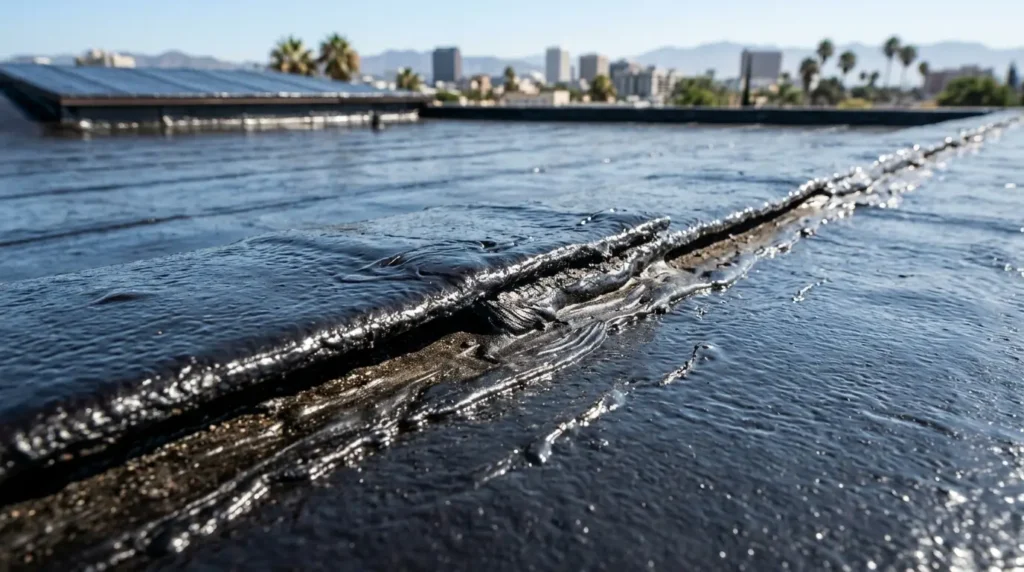
Not every roof needs a full replacement. If your modified bitumen membrane is aging but the deck underneath is still sound, targeted commercial roof repair is often the smarter move. We repair open or lifted seams, surface blisters, cracks, and failing flashing, and we can recoat a tired membrane to extend its service life before a full commercial roof replacement becomes necessary.
The key is catching problems early. A small blister or a lifted seam is inexpensive to fix. Left alone, that same spot lets water into the roof assembly, where it spreads, rots the deck, and drives up the eventual repair. If you are seeing interior stains, damp insulation, or standing water that never drains, it is worth having the roof looked at now. Our free inspection tells you plainly whether a repair will hold or whether replacement is the honest recommendation. Regular commercial roof maintenance is what keeps small problems from ever getting to that stage.
Why Los Angeles Building Owners Choose LA Roof Kings
Frequently Asked Questions