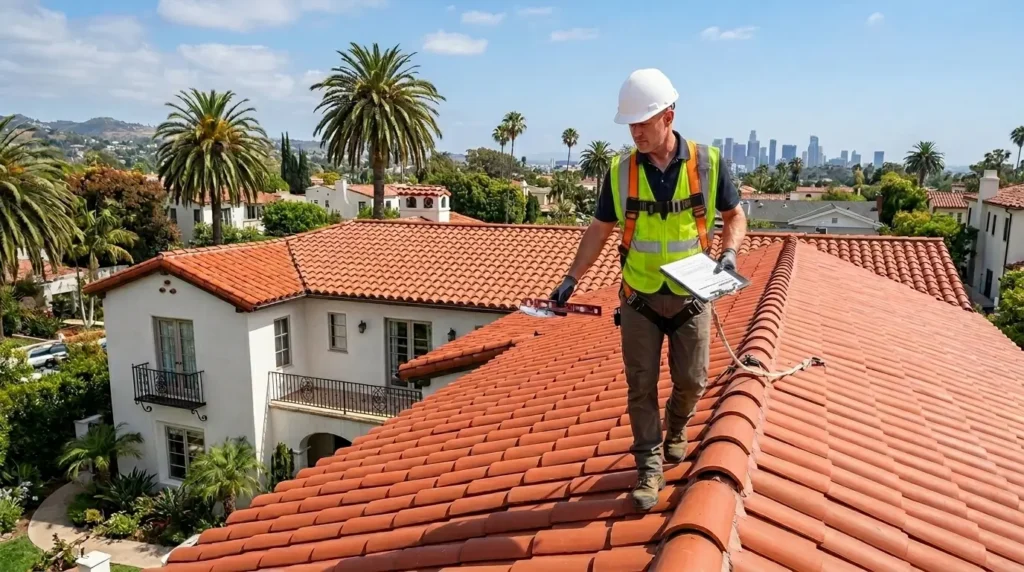
Tile roofs are a classic part of many Los Angeles neighborhoods. From Spanish and Mediterranean to Mission-style homes, clay and concrete tiles have shaped the area’s look for generations. At LA Roof Kings, we have more than 20 years of experience installing, repairing, and replacing tile roofs across Los Angeles County. If you want a roof you can trust, we use quality materials and include a written warranty with every job. Every project starts with a free inspection.
Clay vs. Concrete Tile: What’s the Difference?
Most tile roofs in Southern California are made from either clay or concrete, and both work well in our climate. Clay tiles have the classic terracotta color that suits Spanish and Mediterranean homes, and they keep their color for years. Concrete tiles cost less, come in more colors and styles, and can look like clay, wood shake, or slate. You can pick from shapes like the curved Spanish barrel for a traditional look, flat interlocking tiles for a modern style, or low-profile tiles that look like slate. Both types are heavy, fire-resistant, and made to last for decades. The right choice depends on your home’s style, your budget, and its construction. We’ll go over the pros and cons with you during your inspection.
Installation, Repair, and Replacement
Tile roofing covers a wide range of work, and we handle it all.
- New installation for new builds and full roof replacements, including the underlayment and flashing that do the real waterproofing.
- Tile repair for cracked, slipped, or broken tiles, which is common after foot traffic, falling branches, or simple age.
- Full replacement when the system reaches the end of its life or the underlayment below the tile has failed.
One thing that surprises many homeowners is that the tile often outlasts the waterproof layer beneath it. In many cases, the fix is not new tile at all, but underlayment replacement with the existing tile carefully lifted and reset. If the damage runs deeper, a full roof replacement may be the better long-term call. For smaller, isolated problems, straightforward roof repair is usually enough. Tile is one of several options in our full range of residential roofing, so if a different material fits your home better, we can walk you through that too.
How Tile Roof Installation Works
A tile roof only performs as well as the work underneath it. Here is how we approach a tile installation from start to finish.
Step 1. Roof Assessment and Planning
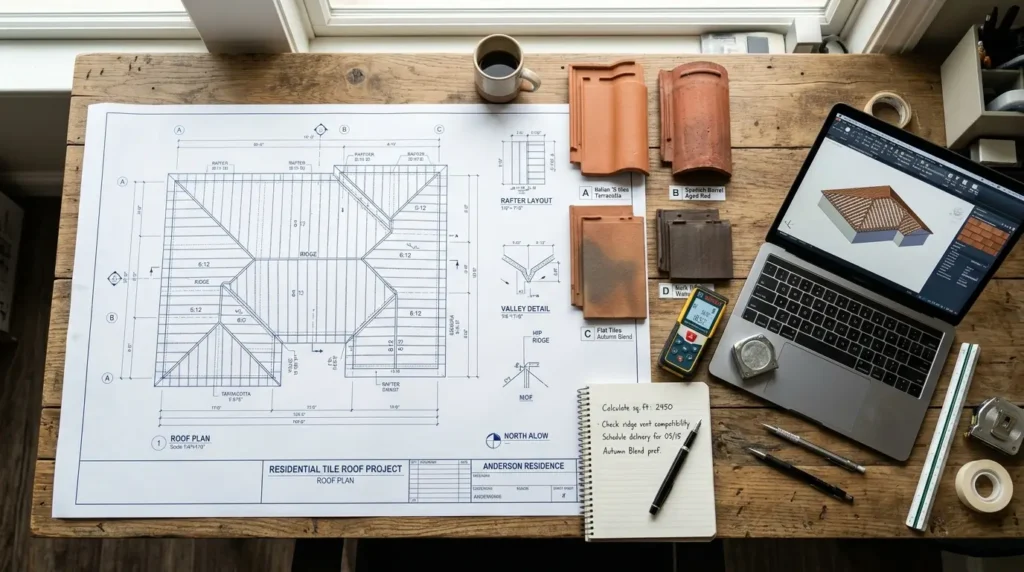
We start with a close look at the existing structure. We check the decking for water damage or rot, review rafter spacing, and confirm your framing can carry the added weight of tile, which is much heavier than asphalt shingles. This tells us whether the deck is ready for tile or needs reinforcement, and it shapes both the timeline and the estimate. The timeline itself depends on the size and complexity of your roof, and you get a realistic schedule after the inspection.
Step 2. Underlayment and Flashing
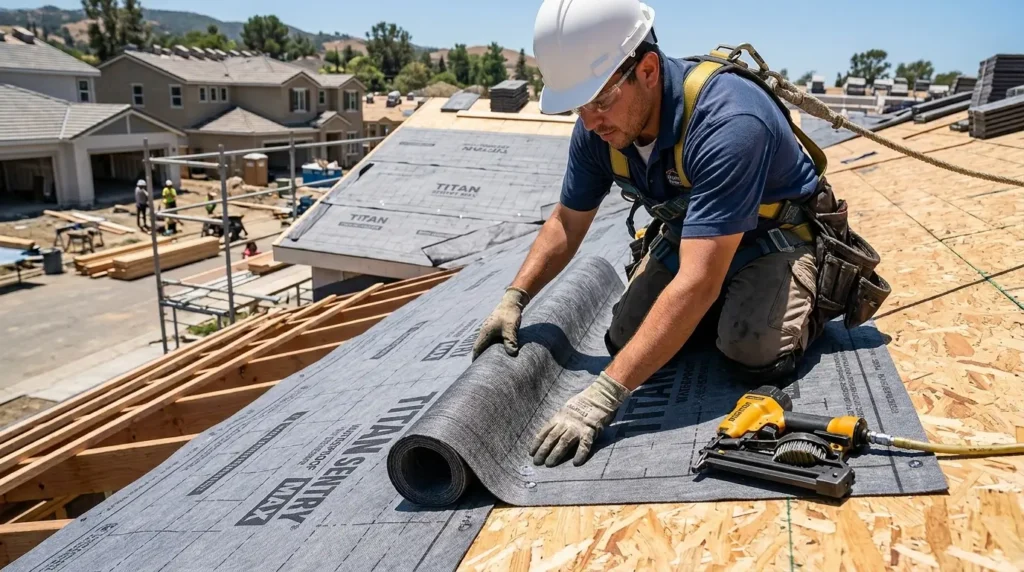
With a sound deck, we install a synthetic underlayment made for tile. This is the real waterproof layer beneath the tile, and it has to be secured to handle the weight and the movement that come with our temperature swings. Before any tile goes down, we flash every vent, chimney, and skylight, since those penetrations are where leaks usually start.
Step 3. Tile Layout and Installation
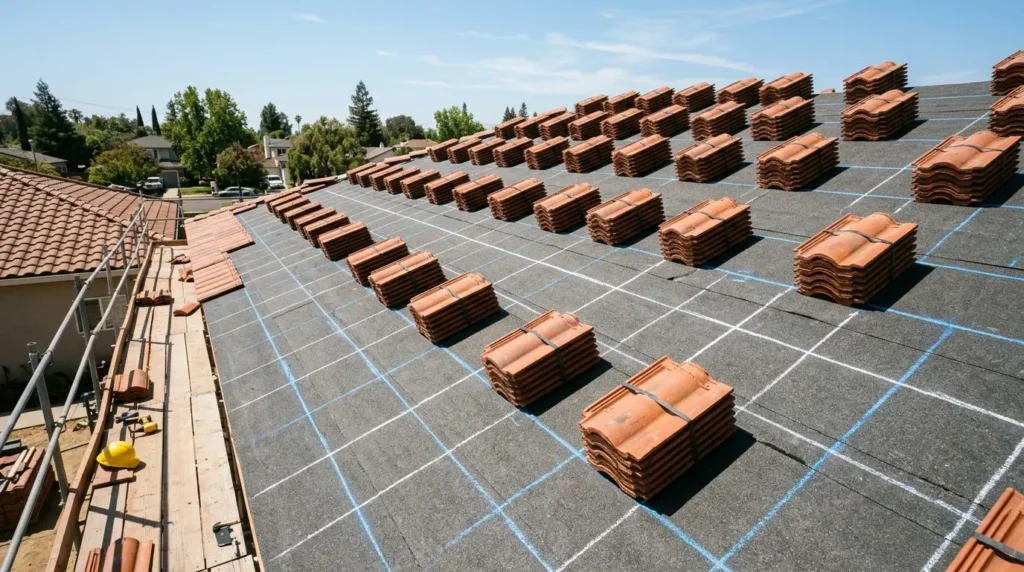
Tiles are set to a layout planned around your roof’s slope, valleys, and ridges. Each one is fastened with corrosion-resistant nails or screws, and the overlap is checked constantly so water sheds away from the structure rather than into it. This is where craftsmanship matters most, because a poor layout or weak fastening undermines the whole roof.
Step 4. Ridge, Valley, and Edge Treatment
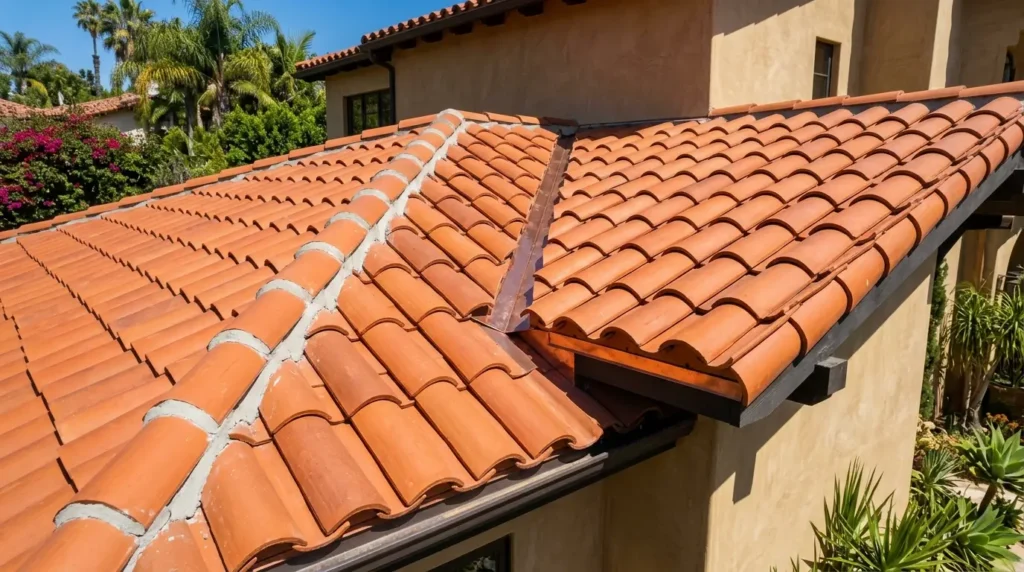
Ridges, hips, valleys, and edges need custom tile work and metal flashing to shed water cleanly and resist wind uplift. We use weather-sealed ridge caps and trim that match your tile profile, so the finished roof is both watertight and visually consistent.
Step 5. Final Inspection and Cleanup
Once the tile is set, we inspect the whole roof for proper fastening, correct overlap, and sealed flashing, and we confirm there are no gaps where water could enter. We clear the site of debris and hand you a written warranty that spells out coverage and basic maintenance.
Why Tile Roofing Works in Los Angeles
Tile is a great fit for our climate, and not just because it looks good. Strong sun and long, hot summers wear out lighter materials quickly, but tile keeps its color and shape for decades. Both clay and concrete tile have a Class A fire rating, which is the highest and most important in wildfire areas across Los Angeles County. Tile also reflects heat, creating an air gap that helps keep homes cooler and can lower cooling costs during our long summers. This supports the cool roof goals in California Title 24. Because of all this, tile roofing in Los Angeles is a long-term investment that pays off over time, not just a quick bargain.
Signs Your Tile Roof Needs Attention
Tile roofs need little maintenance, but not none. Look out for cracked or slipped tiles, especially after strong winds or if someone has walked on the roof. Water stains on ceilings often mean the underlayment has failed, not the tile. Check for debris in the valleys, broken tiles at the edges, and granules in the gutters. Getting your roof inspected once a year helps catch small issues before they become expensive.
What Tile Roofing Costs in Los Angeles
Tile roofing costs more than many other materials, and the price depends on things like your roof’s size and slope, whether you choose clay or concrete, the condition of the underlayment and framing, and if the tiles can be reused or need replacing. Since tile is heavy, some older homes may need extra support, which can add to the cost. Online prices are just rough estimates. The best way to get an accurate price is with a free on-site inspection, where we check everything and give you a written quote.
Why Choose LA Roof Kings for Los Angeles Tile Roofing
Experience matters with tile roofing. If the tiles are set wrong or the underlayment and flashing are not done right, the roof will leak, no matter how good it looks. We have worked on tile roofs throughout Los Angeles County for more than 20 years, and we are fully licensed under California Contractor License #600662. As a family-owned business, you talk to real people who answer the phone and back up our work with a written warranty. We always give you an honest opinion about whether your roof needs a small repair, a reset, or a full replacement, and we never recommend more than you need.
Frequently Asked Questions