Industrial roofs carry more than weather. They hold heavy equipment, vent process exhaust, and cover the stock and machines that keep your business running. LA Roof Kings provides industrial roofing Los Angeles facility managers can rely on, from targeted repairs to full roof replacement. As a result, your building stays dry, your crews keep working, and we catch small problems before they turn into shutdowns.
As a family-owned, licensed and insured contractor, we have spent more than 20 years on roofs across Los Angeles County. Our work falls under California Contractor License #600662, and every project comes with a written warranty. For that reason, owners of warehouses, factories, and distribution centers call us when they need industrial roofing contractors who give straight answers. To book a free roof inspection, call (310) 919-7587.
Industrial Roofing Services in Los Angeles
Most industrial roofs need several kinds of work over their life, not just one big project. Therefore, we handle the full cycle, from factory roof repair to complete reroofing. You work with one team that already knows your building, its equipment, and its history. Here is what we do on industrial properties:
Roof Systems for Factories, Warehouses and Plants
Industrial roofing in Los Angeles usually means flat or low-slope roofs, and the right membrane depends on what happens on top and underneath. TPO roofing reflects heat and suits large, sunny roofs where cooling costs matter. EPDM roofing handles temperature swings well. Meanwhile, modified bitumen roofing and built-up roofing stand up to heavy foot traffic around equipment.
Many older warehouses also sit under metal roofs that remain structurally sound but leak at seams and fasteners. In those cases, a silicone roof coating can seal the surface and add reflectivity without a full tear off. For decks, curbs, and parapets that need complete leak protection, our commercial roof waterproofing service covers the whole assembly.
What Makes an Industrial Roof Different
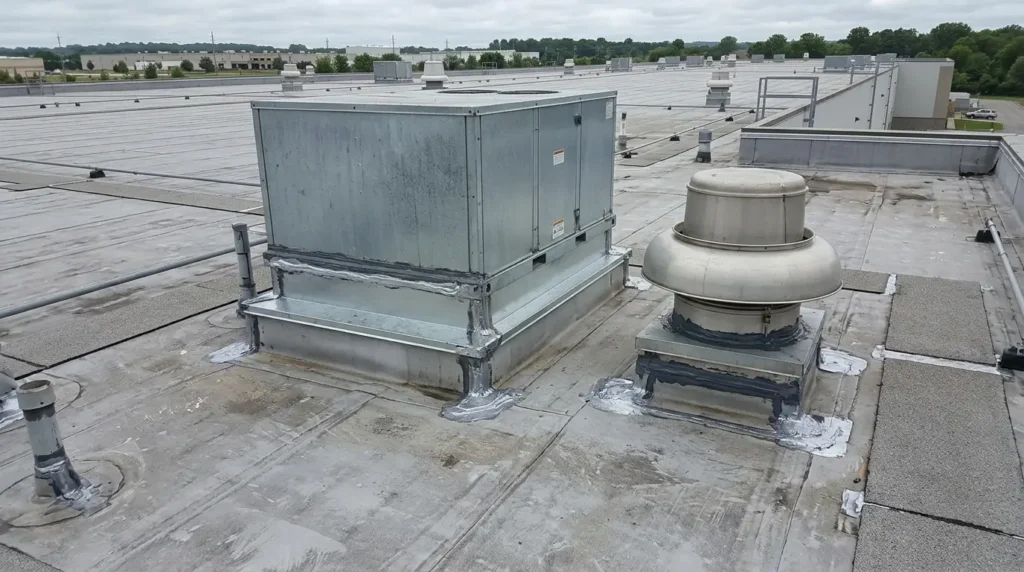
Industrial and commercial roofs share many materials, yet industrial roofs work much harder. They often span tens of thousands of square feet, so one drainage problem can affect a huge area. In addition, they carry exhaust fans, process piping, and large HVAC units. Every one of those penetrations needs flashing that holds up to constant vibration and heat.
Foot traffic adds another layer of wear. Maintenance crews cross the roof often to service equipment, and each trip stresses the membrane. Some facilities also vent fumes or oils that break down the wrong roofing material. That is why our approach to industrial roofing in Los Angeles starts with how you use the building, then matches the system to those conditions.
How We Plan Every Project Around Your Operations
Downtime can cost an industrial business more than the roof work itself. So we plan each project around your shifts, your safety rules, and your production needs. Here is how a typical job runs, from the first call to the final walkthrough:
- Free inspection. Our team covers every section of the roof, pins down where each leak starts, and photographs what we find.
- Written scope. An itemized proposal spells out the work, and we tell you plainly whether repair or replacement makes more sense.
- Scheduling around shifts. We stage materials and plan loud work for hours that keep your floor running.
- Site safety. Before work starts, our crew guards open skylights and roof edges and keeps loading areas clear.
- Clean finish. After the final walkthrough, we leave the roof clear of debris and give you a written warranty for the work.
Cool Roof Rules for Industrial Buildings
California’s Title 24 energy code shapes almost every industrial roofing project in Los Angeles. Generally, replacing half of a nonresidential low-slope roof, or more than 2,000 square feet, triggers cool roof requirements for the new surface. These products reflect sunlight and release heat, which lowers cooling loads inside large buildings. We choose rated cool roof products, so your project is ready for its final inspection.
Industrial Buildings We Serve Across Los Angeles County
Our crews provide industrial roofing throughout Los Angeles County. In Downtown Los Angeles, that means warehouse roofing in the Industrial District, plus work on converted Arts District buildings and Fashion District garment facilities. We also work along the manufacturing corridors of Vernon, Commerce, and Santa Fe Springs. On top of that, we serve industrial parks in Carson and Sun Valley.
Our Service Areas page lists every city we reach, and the Services page shows our full lineup. For flat roof work on offices and retail buildings, visit our commercial roofing hub. Industrial owners in Orange County can turn to OC Roof Kings, our sister company, for the same work.
Frequently Asked Questions